
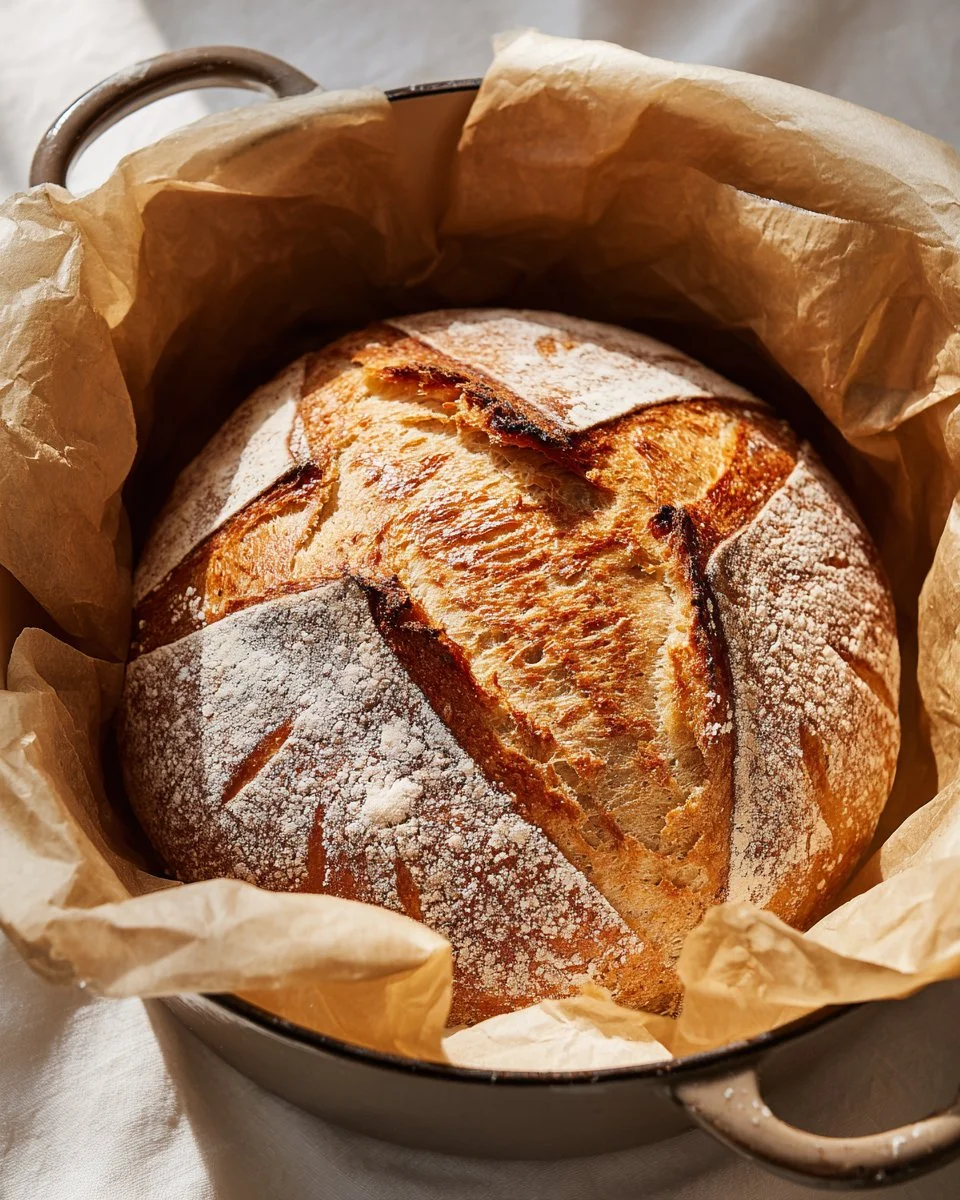
Fail-Proof Sourdough Bread: Easy No-Fuss Homemade Loaf
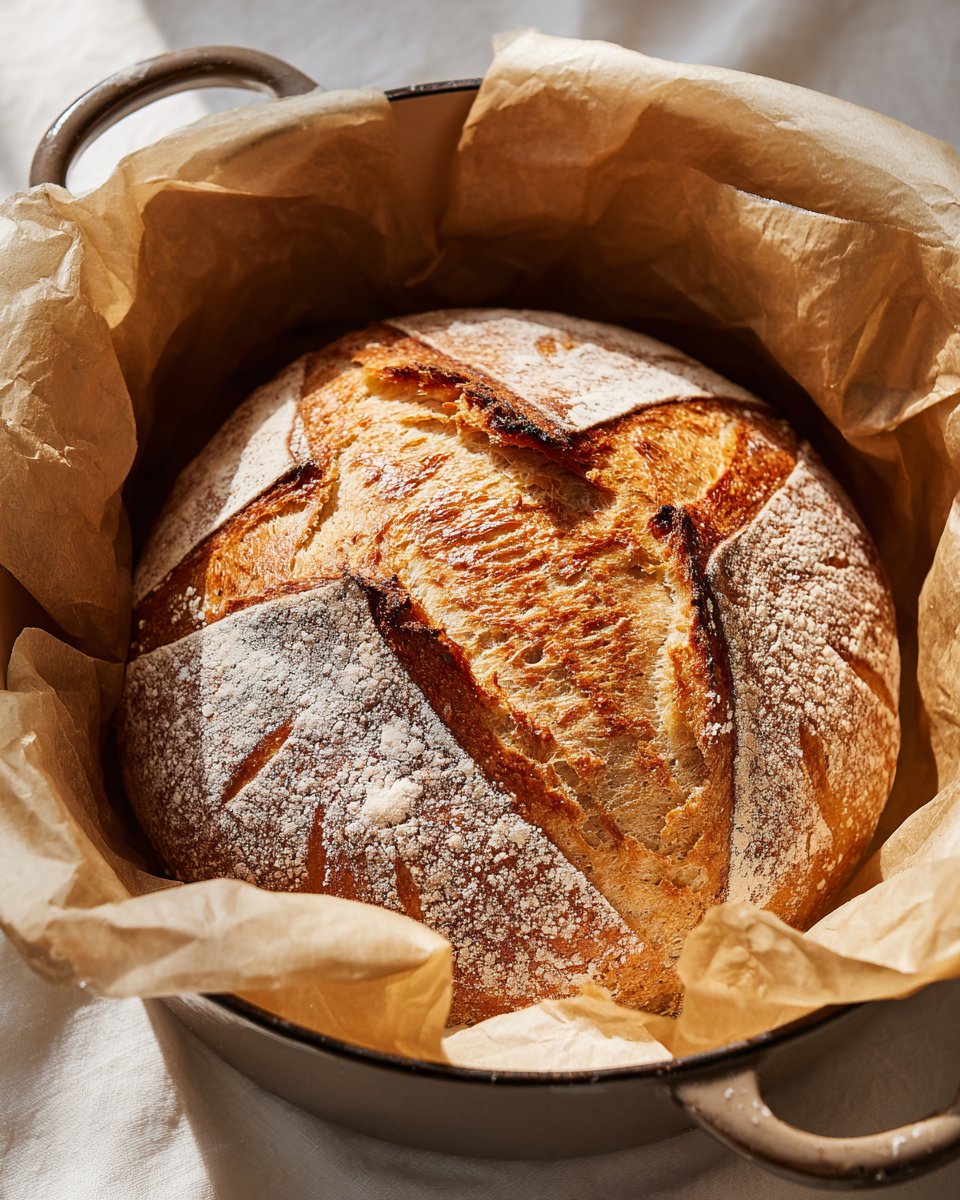
I fell in love with sourdough the first time I pulled a steaming, crackly loaf from the oven that actually tasted like the artisan breads I’d admired in bakery windows. Between juggling work, family dinners, and the endless small chores of life, this Fail-Proof Sourdough Bread became my weekly ritual — simple enough to fit into a busy schedule, yet rewarding in the deeply comforting way bread hot from the oven always is. Sourdough itself has ancient roots — wild yeasts and lactic acid bacteria have been used for millennia to leaven and preserve bread — and this version captures that timeless flavor with a modern, forgiving approach.
Who is this recipe for?
- This recipe is for busy home bakers, beginners who want to try sourdough with minimal fuss, and anyone who loves a crusty, flavorful loaf without complicated steps.
Core ingredients overview:
- This loaf uses 3 cups all-purpose flour, 1 1/2 cups warm water, 1/2 teaspoon instant yeast, and 1 teaspoon salt to create a simple, highly reliable sourdough-style bread that develops flavor over a long room-temperature rest.
Tools & Ingredients
Tools (you’ll need)
- Large mixing bowl — to mix and hold the dough during its long rest.
- Wooden spoon or dough whisk — for easy stirring of a shaggy dough.
- Plastic wrap or a bowl cover — to keep the dough from drying out during fermentation.
- Measuring cups and spoons — to ensure accurate proportions.
- Dutch oven with lid (or heavy oven-safe pot) — for professional steam and a crunchy crust.
- Baking sheet or parchment paper — for shaping and transferring the loaf.
- Bench scraper (optional) — helpful for handling and shaping sticky dough.
- Kitchen towel — to rest the dough during shaping.
- Cooling rack — to cool the loaf without sogginess.
- Oven mitts — for safe handling of the hot Dutch oven.
Ingredients (with benefits)
- 3 cups all-purpose flour — provides structure and a tender crumb while being widely available.
- 1 1/2 cups warm water — activates the yeast and hydrates the flour for better gluten development.
- 1/2 teaspoon instant yeast — gives a predictable rise and speeds up fermentation compared to wild starter.
- 1 teaspoon salt — enhances flavor and strengthens the dough’s gluten network.
Instructions
- In a large bowl, politely combine the dry ingredients: 3 cups all-purpose flour, 1/2 teaspoon instant yeast, and 1 teaspoon salt. Stir briefly to distribute.
- Gradually add 1 1/2 cups warm water to the dry mix while stirring with a wooden spoon or dough whisk until a shaggy, sticky dough forms.
- Cover the bowl with plastic wrap or a tight-fitting lid and let it sit at room temperature for 12 to 18 hours. This long rest develops flavor and texture.
- About 30–60 minutes before baking, preheat your oven to 450°F (232°C) and place a Dutch oven with its lid inside to heat.
- On a generously floured surface, gently turn the rested dough out. Using floured hands or a bench scraper, shape the dough into a round loaf by folding the edges toward the center and turning it seam-side down to create surface tension.
- Let the shaped loaf rest for 30 minutes on a piece of parchment or a lightly floured towel while the Dutch oven finishes heating.
- Carefully remove the hot Dutch oven from the oven using oven mitts. Place the parchment with the loaf into the Dutch oven (or transfer the loaf directly if not using parchment).
- Cover the pot with its lid and bake for 30 minutes to trap steam and promote oven spring.
- After 30 minutes, remove the lid and continue baking for an additional 15 minutes, or until the crust is deep golden-brown.
- Remove the bread from the Dutch oven and place it on a cooling rack. Allow the loaf to cool for at least 30–60 minutes before slicing to set the crumb and prevent gummy texture.
FAQ
Q: Can I freeze this bread?
- A: Yes. Slice the cooled loaf and freeze in airtight bags for up to 3 months. Toast or thaw slices as needed.
Q: What can I use instead of instant yeast?
- A: You can substitute an active dry yeast (use the same amount but dissolve it in the warm water first). For a natural starter, increase fermentation time and adapt hydration as needed.
Q: Can I make this with whole wheat flour?
- A: Yes — substitute up to 50% whole wheat flour for added flavor and nutrition, but expect a denser crumb and slightly shorter rise.
Q: Do I need a Dutch oven?
- A: A Dutch oven helps create steam for a crisp crust, but you can use a heavy pot or bake on a covered baking sheet and add a pan of hot water to the oven for steam.
Tips & Tricks
- Use warm (not hot) water: about 95–105°F (35–40°C) is ideal to activate yeast without killing it.
- Don’t rush the long rest: the 12–18 hour room-temperature fermentation is what gives this loaf its flavor — trust the time.
- Flour your hands and work surface generously when shaping; the dough will be sticky and gentle handling preserves air pockets.
- Preheat your Dutch oven thoroughly for best oven spring and a blistered, crisp crust.
Enjoy this warm, crusty loaf with butter or your favorite spread — and please share a photo if you bake one! Always add
tag after Directions.
Conclusion
For more ideas and variations on reliable, beginner-friendly sourdough techniques, this helpful guide walks through steps and tips: Homemade Sourdough Bread, Step by Step | Alexandra’s Kitchen. If you’d like a different take on a foolproof formula, try this version for inspiration: Henry’s Foolproof Sourdough – Chef My Life. For more approachable sourdough recipes and serving ideas, see this resource: Easy Sourdough Bread Recipe | Feasting At Home.