
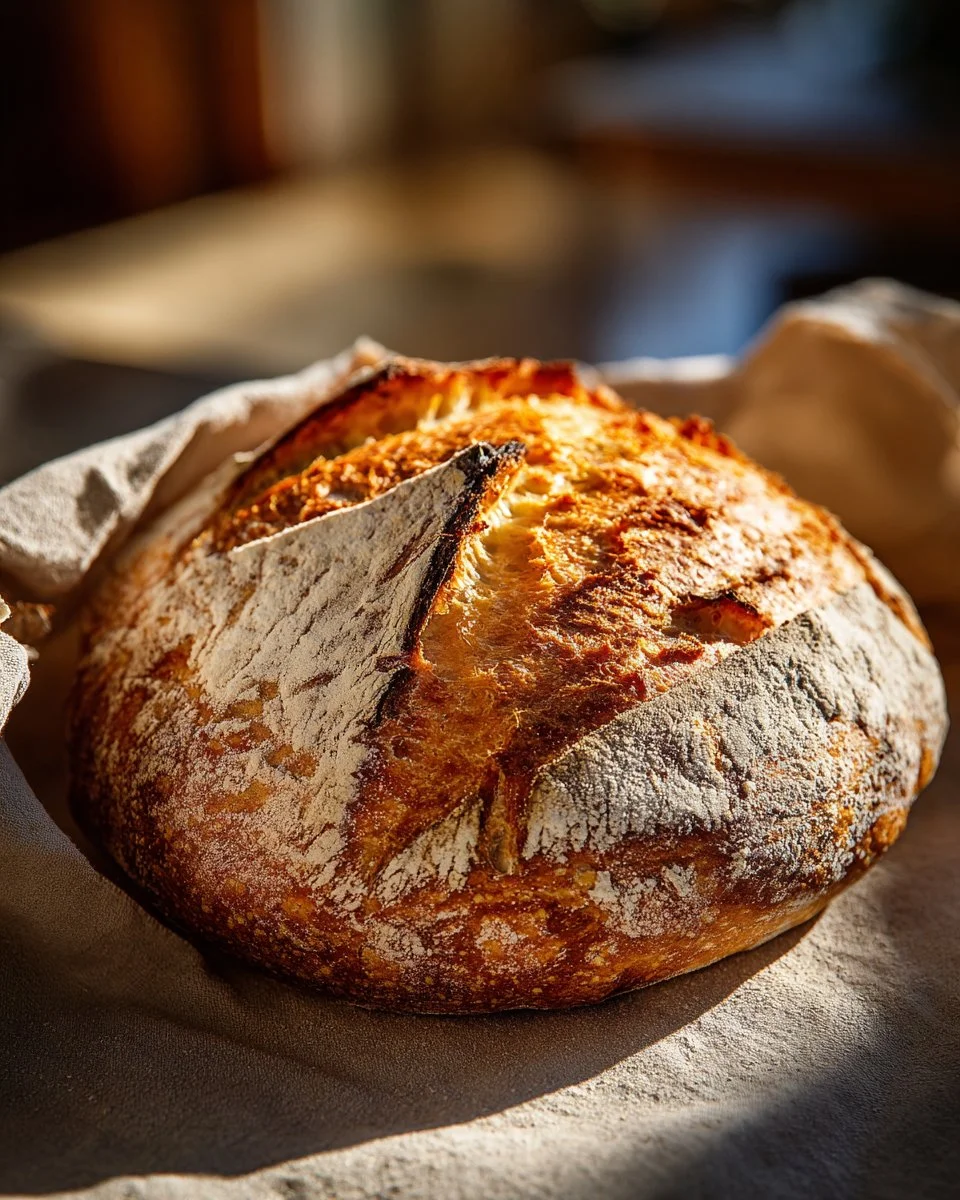
Beginners Sourdough Bread Recipe: High Starter Method — Beginner Sourdough Guide
I fell in love with this Beginners Sourdough Bread Recipe: High Starter Method the first time I baked it on a rainy Sunday. I’d been nervous about sourdough for months — the starter, the timing, the folding — but this high-starter approach made the process feel friendly and forgiving. There’s something deeply comforting about the ritual: feeding the starter, stretching the dough, and smelling that warm, slightly tangy crumb fill the kitchen. Sourdough has deep cultural roots around the world — from traditional San Francisco tang to European hearth loaves — and this simple method brings a little of that heritage to your home without complicated steps.
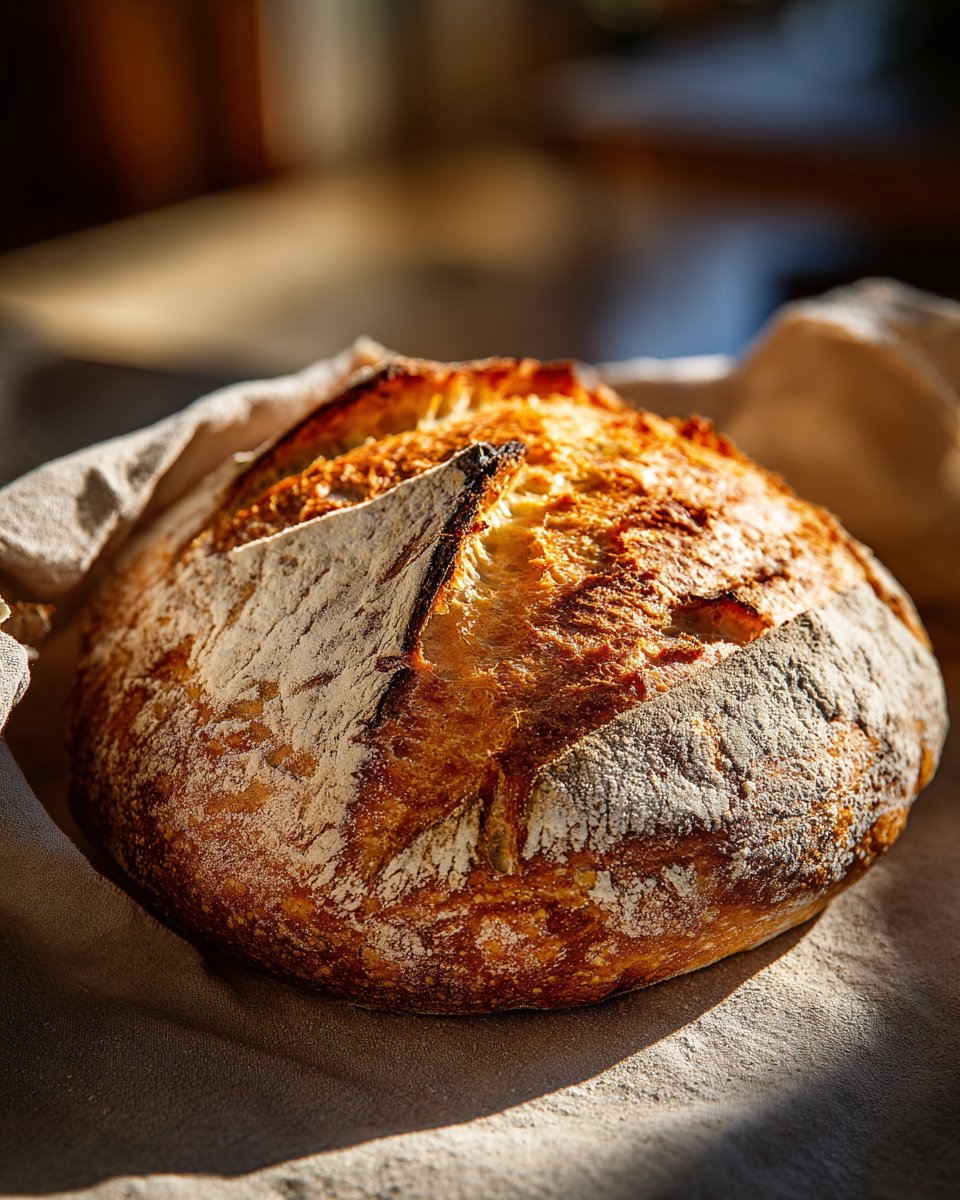
Who is this recipe for?
- This recipe is for beginners, busy parents looking for a mostly hands-off loaf, and anyone who wants a reliable, flavorful sourdough with minimal fuss.
Core ingredients overview:
- 2 cups Active Sourdough Starter (400 grams) (active and bubbly, made from equal parts flour and water), 3 cups Sifted All-Purpose Flour (360 grams), 1 cup Warm Water (240 grams), 1.5 teaspoons Salt (≈9 grams).
- This combination uses a high starter ratio for a faster, tangy rise and a tender crumb.
Tools & Ingredients
Tools (what you’ll need)
- Large mixing bowl (non-metal) — gentle on wild yeast activity.
- Large spoon or wooden spoon — for initial mixing.
- Digital kitchen scale or measuring cups — for accurate measurements.
- Dough scraper — helps handle wet dough.
- Proofing basket (banneton) or a towel-lined bowl — supports shaping and proofing.
- Dutch oven with lid (or cast-iron pot) — creates steam for good oven spring.
- Parchment paper — moves dough safely into the hot pot.
- Very sharp knife or razor (lame) — for clean scoring.
- Clean kitchen towel and oven mitts — for covering and safety.
Ingredients (with benefits)
- 2 cups Active Sourdough Starter (400 grams) (active and bubbly, made from equal parts flour and water) — provides natural leavening, flavor, and aroma.
- 3 cups Sifted All-Purpose Flour (360 grams) — builds structure while keeping the crumb tender; sifting prevents compact measuring.
- 1 cup Warm Water (240 grams) — hydrates the dough for open crumb and helps starter activity.
- 1.5 teaspoons Salt (≈9 grams) — enhances flavor and regulates fermentation (I love Himalayan Pink Salt for a subtle mineral note).
Instructions
- Add starter. In a large mixing bowl (not metal), add 2 cups (400 grams) of 100% hydration active sourdough starter. (For active starter, feed it and keep it OUT of the fridge for at least 4 hours, or overnight.)
- Mix water. Add 1 cup (240 grams) warm water and whisk until well combined with the starter.
- Add flour and salt. Add 3 cups sifted flour (360 grams) and 1.5 teaspoons salt (≈9 grams). (Sift or fluff your flour before measuring so it isn’t too compact in the measuring cup.)
- Combine. Use a large spoon to mix the ingredients together. It will form a wet, biscuit-like, shaggy dough.
- First rest. Cover this shaggy dough with a clean damp kitchen towel, and let the dough rest in a warm place for 2 hours. (Or in a warm oven (about 80°F / ~27°C) for about 1 hour.)
- First stretch & fold. After 2 hours of rising on your counter, uncover the dough. With wet hands, pick up one side of the dough and fold it in half over the opposite side. Turn the bowl 90 degrees. Repeat 4–6 times by stretching and folding all four sides, rotating the bowl between sets. (Wet hands help prevent sticking.)
- Rise. Cover with a clean towel (or plastic wrap), and let the dough rise about 45 minutes (depending on kitchen temperature) or until it has roughly doubled again.
- Second stretch & fold. Uncover the dough, wet your hands, then pick up one side and fold it in half over the other. Rotate the bowl 90 degrees. Repeat 4–6 times over all four sides. The dough will look more bread-like.
- Rise again. Cover with a clean towel, and let rise until doubled.
- Third stretch & fold. Uncover, wet hands, then pick up one side and fold it over the top. Rotate 90 degrees and repeat 4–6 times across all sides. The dough will become smooth and elastic.
- Rise again. Cover, and let rise until doubled.
- Fourth stretch & fold. Uncover, wet hands, and repeat the stretch-and-fold process 4–6 times. Rotate as you go. The dough should feel fluffy and bread-like.
- Shape. After the 4th stretch and fold, shape your dough into a round loaf.
- Proof. Dust a towel or proofing basket generously with flour and place the shaped sourdough dough ball inside. Dust the top of the dough with flour and cover with a clean towel.
- Refrigerate. Place the sourdough bowl into the refrigerator to chill and rise for 4–8 hours (this cold proof improves flavor and makes handling easier).
- Preheat oven. Preheat your oven to 400°F (200°C) and place your Dutch oven (with lid) inside to preheat as well.
- Prepare parchment. Cut a 2-foot section of parchment and place it on your counter.
- Turn out the dough. Gently turn out your chilled sourdough ball onto the parchment paper.
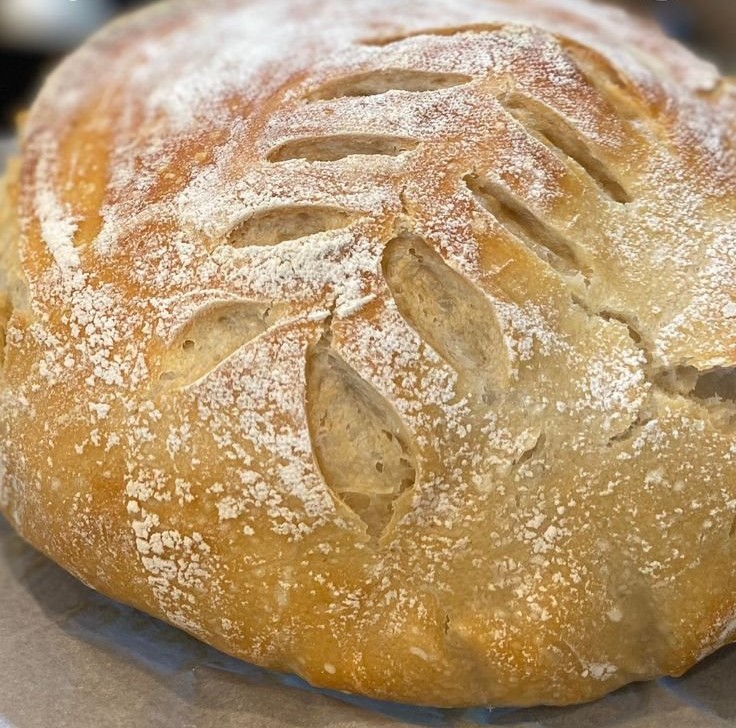
- Score. Use a very sharp knife or razor to score a design into the top of your dough. Scoring helps controlled expansion and looks beautiful.
- Transfer to Dutch oven. Remove the hot Dutch oven from the oven. Lift the raw sourdough loaf into the Dutch oven by the ends of the parchment paper (it’s okay if parchment hangs over the sides). Put the lid on.
- Bake covered. Use hot pads or towels to put the hot Dutch oven back into the preheated oven at 400°F (200°C). Bake covered for 25 minutes.
- Bake uncovered. Remove the lid and bake for 25 more minutes until deeply golden and crisp.
- Cool. Remove the loaf and let it cool completely on a wire rack before slicing for best texture.
- Share and ask. Ask me any questions you have in the comments, and don’t forget to rate this recipe card and let me know what you think!
FAQ
Q: Can I freeze this bread?
A: Yes. Once fully cooled, slice and freeze in an airtight bag for up to 3 months. Toast or thaw slices as needed.
Q: What if my starter isn’t very active?
A: Feed it for 2–3 cycles at room temperature (equal parts flour and water by weight) until it doubles within 4–6 hours and becomes bubbly before using.
Q: Can I use whole wheat flour instead of all-purpose?
A: You can substitute up to 25–30% whole wheat for flavor and nutrition, but expect a denser crumb and adjust hydration slightly (whole grains absorb more water).
Q: Can I shorten the cold proof?
A: Yes; a 2–4 hour fridge rest will still work, but longer (4–8 hours) develops more flavor and makes scoring easier.
Tips & Tricks
- Keep your starter active: Feed it the day before baking and leave it at room temperature until bubbly — that activity powers a strong rise.
- Wet hands for folding: Always wet your hands with water (not oil) when doing stretch-and-folds to prevent sticking and to preserve dough structure.
- Use a hot Dutch oven: Preheating the Dutch oven creates steam and gives much better oven spring and crust.
- Be patient with cooling: Wait at least 1 hour after baking before slicing to let the crumb set; cutting too soon makes the crumb gummy.
Conclusion
If you’re new to sourdough or want a dependable loaf with minimal stress, this high-starter method is a friendly approach. If you need a refresher on building or maintaining a starter, see this helpful Beginner Sourdough Starter Recipe – The Clever Carrot for clear guidance. For an alternate step-by-step beginner sourdough walkthrough, check this How To Make Sourdough Bread | Beginner Sourdough Recipe (No …). To learn more about sourdough basics and techniques, this Sourdough Bread: A Beginner’s Guide – The Clever Carrot is an excellent resource.
Enjoy your fresh sourdough—share a photo and tell me how it turned out!