
Easy Small Batch Ciabatta Rolls — Ciabatta Recipe for Home Bakers
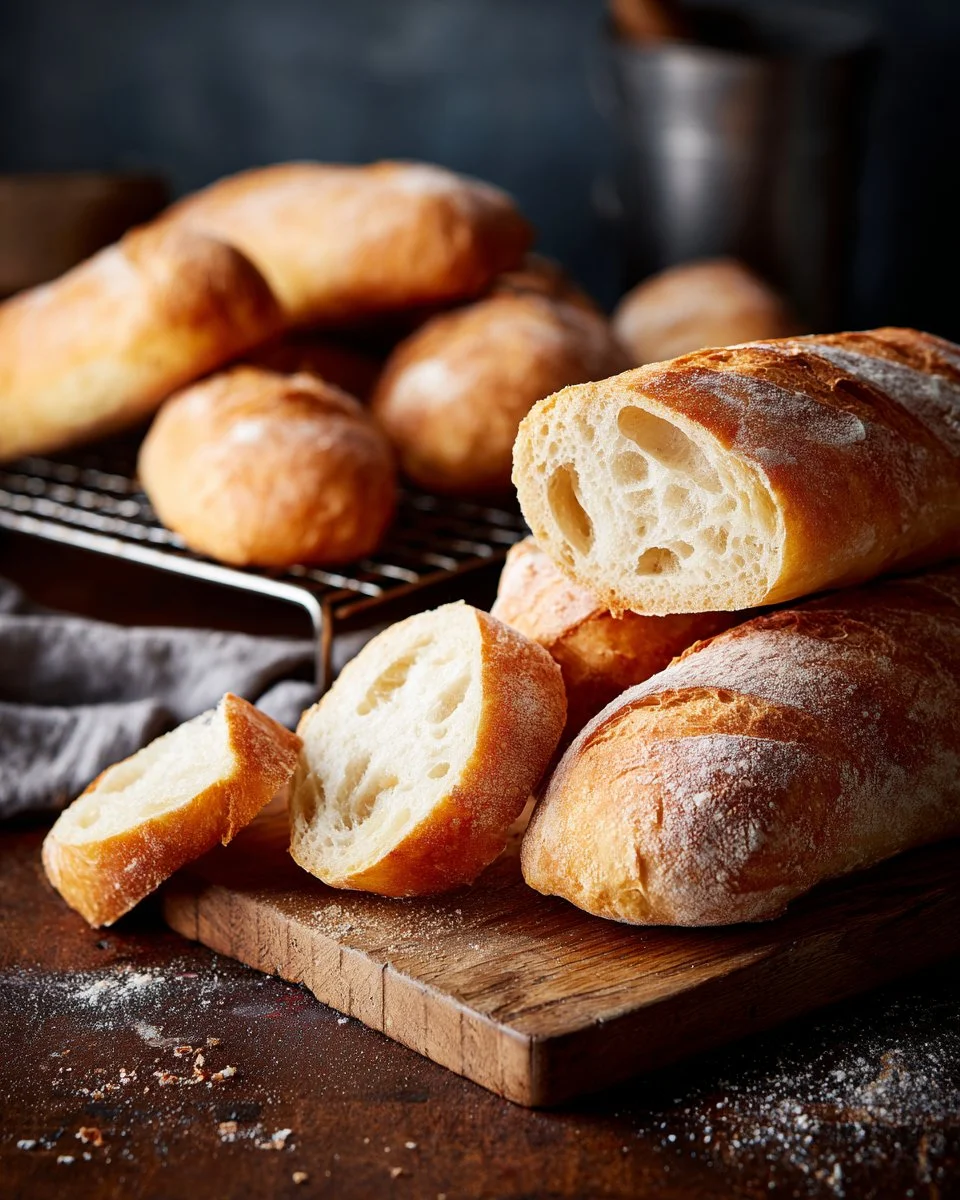
I fell in love with ciabatta the first time I pulled a warm, airy roll out of the oven and tore it open to reveal that beautiful open crumb and crackly crust. Growing up, my grandmother would bring home Italian loaves from the bakery, and their rustic character always felt like a small celebration. These Easy Small Batch Ciabatta Rolls let me recreate that cozy bakery moment without hours of fuss — perfect for weekday dinners or a weekend brunch. Ciabatta is a relatively modern Italian bread (the name means “slipper” in Italian and it rose to fame in the 1980s), prized for its high-hydration dough and light interior. These small-batch rolls capture that texture in a simple, approachable format.

Who is this recipe for?
- This recipe is for busy home bakers, beginners who want a forgiving dough, and anyone who loves rustic bread served with soups, salads, or olive oil for dipping.
Core ingredients (brief overview)
- This small-batch ciabatta uses 2 cups all-purpose flour, 1 teaspoon instant yeast, 1 teaspoon salt, and 1 cup warm water to create a sticky, high-hydration dough that bakes into airy, crusty rolls.
Tools & Ingredients
Tools you will need:
- Large mixing bowl — for combining and rising the dough.
- Wooden spoon or sturdy spatula — to mix sticky dough.
- Measuring cups and spoons — to ensure accurate measurements.
- Clean kitchen towel or plastic wrap — to cover the dough while it rises.
- Baking sheet — for baking the rolls.
- Parchment paper — prevents sticking and helps with transfer.
- Bench scraper or sharp knife — to divide the dough cleanly.
- Oven (450°F / 230°C) and cooling rack — for baking and cooling.
Ingredients (with benefits):
- 2 cups all-purpose flour — provides the structure and is easy to find; versatile for a light crumb.
- 1 teaspoon instant yeast — quick and convenient for a reliable rise without proofing.
- 1 teaspoon salt — enhances flavor and strengthens the dough’s gluten.
- 1 cup warm water — hydrates the dough to create the characteristic open crumb and soft interior.
Instructions
- In a large bowl, mix together the flour, instant yeast, and salt. Use a wooden spoon or spatula and combine evenly.
- Gradually add warm water to the dry ingredients, stirring until a sticky dough forms. It should be loose and tacky — not a stiff ball.
- Cover the bowl with a clean kitchen towel or plastic wrap and let the dough rise for 2 hours or until doubled in size. Be patient; this slow rise builds flavor and airiness.
- Preheat your oven to 450°F (230°C). Position an oven rack in the middle.
- Generously flour a work surface and turn the dough out onto it. Use floured hands to handle the sticky dough gently.
- Divide the dough into 6 equal portions and shape them into rolls, being careful not to deflate the dough too much. Lightly stretch each piece into a rough roll shape — rustic is perfect.
- Place the rolls on a parchment-lined baking sheet, leaving space between them to expand. Optionally dust a little more flour on top for a rustic look.
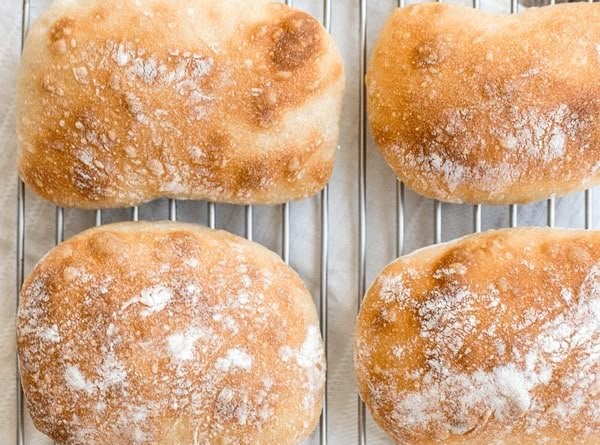
- Bake for 20–25 minutes, or until golden brown and crusty. Rotate the sheet halfway through if your oven heats unevenly.
- Let them cool slightly on a rack for 10–15 minutes before serving so the crumb sets.
FAQ
Q: Can I freeze these rolls?
A: Yes — cool completely, then wrap tightly in plastic wrap and place in a freezer bag. Freeze up to 2 months. Reheat in a 350°F (175°C) oven for 10–12 minutes from frozen or thaw and warm for 5–8 minutes.
Q: What can I use instead of instant yeast?
A: You can use active dry yeast — use 1¼ teaspoons and dissolve it in a small amount of the warm water first. You can also experiment with a fed sourdough starter (adjusting hydration and ferment times).
Q: My dough is very sticky. What should I do?
A: High hydration is normal for ciabatta. Use well-floured hands and surface when shaping, and avoid adding too much flour, which can make the rolls dense. A bench scraper helps manage sticky dough cleanly.
Q: How do I get a crisper crust?
A: Bake on a preheated baking stone or a hot sheet if possible, and create steam in the oven by placing a small pan of hot water below the baking sheet during the first 10 minutes or misting the oven (carefully) with water.
Tips & Tricks
- Hydration tolerance: This dough is intentionally wet. Embrace the stickiness — it yields the open crumb ciabatta is known for.
- Gentle handling: When dividing and shaping, handle the dough gently to preserve air pockets. Overworking will deflate the rolls.
- Flour your tools: Keep a small dish of flour nearby to dust your hands and bench scraper so shaping is easier.
- Timing: If your kitchen is cool, the dough may take longer than 2 hours to double. Let it rise until visibly doubled rather than relying strictly on time.
Conclusion
For additional variations and inspiration, check recipes like Easy Small Batch Ciabatta Rolls – Ahead of Thyme, the compact approach at Small Batch Mini Ciabatta » the practical kitchen, and another approachable take at Small Batch Ciabatta Rolls – Harvest & Nourish.
Enjoy these warm ciabatta rolls with olive oil, soup, or your favorite sandwich fillings — and please share your baking wins with friends and family.
Always add
tag after Directions.