
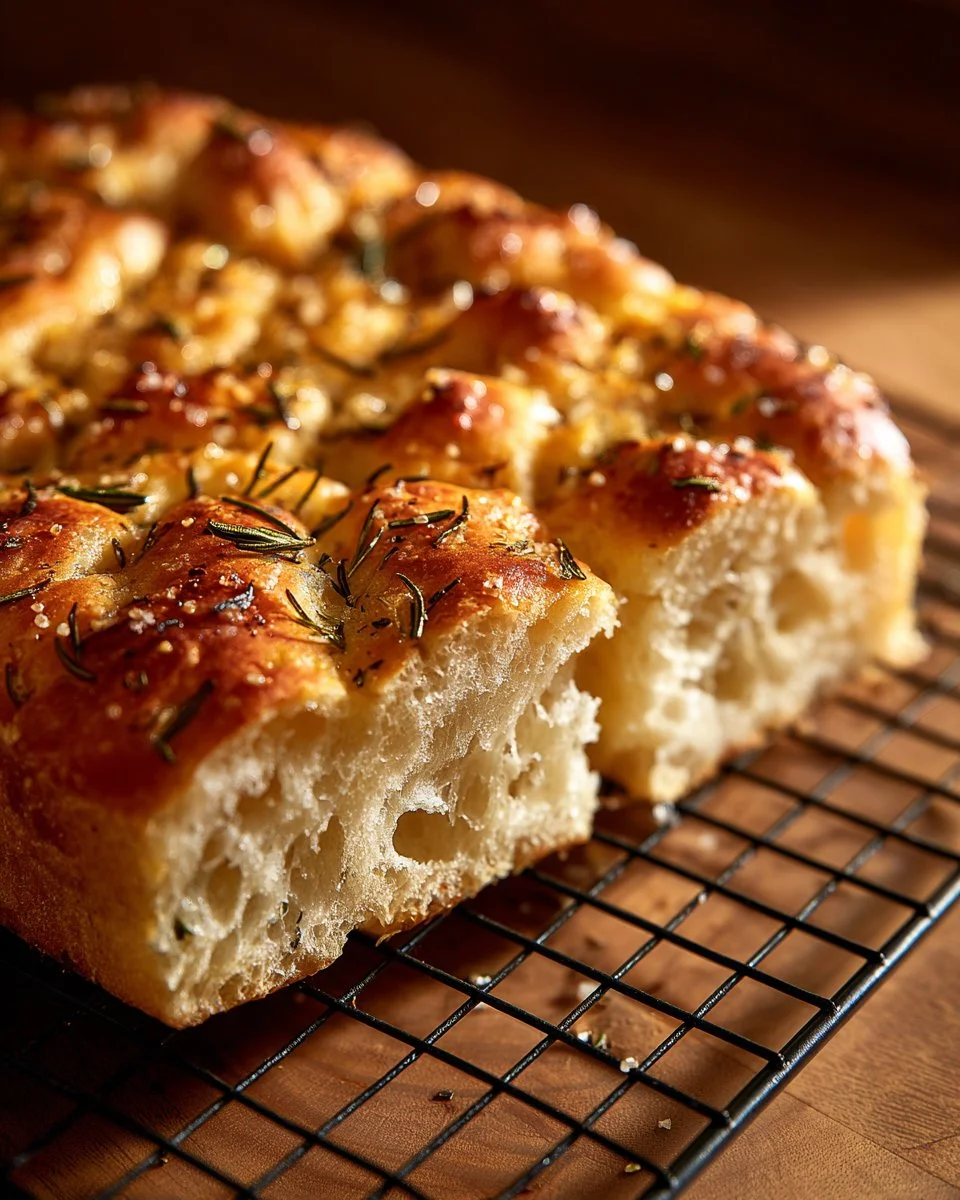
Sourdough Focaccia — Easy Sourdough Focaccia Recipe
I fell in love with sourdough focaccia the first time I pressed my fingers into a warm, olive oil–glossed sheet of bread while traveling through Liguria. It was served simply — a few dimples, a scattering of rosemary, and flaky salt — but every bite felt like a tiny, sunlit story. Back home, making sourdough focaccia became my weekend ritual: feeding the starter, listening to the gentle bubble of fermentation, and shaping a rustic loaf that brings friends and family to the table. Focaccia has deep roots in Italian culinary tradition as a versatile, communal bread — a base for toppings or a perfect companion to soups and salads — and the sourdough version adds that tangy, complex flavor that only time and wild yeast can create.

Who is this recipe for?
- This recipe is for home bakers who love slow-fermented breads, beginners curious about sourdough, busy parents who want make-ahead bread, and anyone who enjoys rustic, flavorful loaves with minimal hands-on time.
Core ingredients overview:
- This focaccia uses 500g bread flour, 350g water, 100g active sourdough starter, 10g salt, 50ml olive oil, flaky sea salt for topping, and fresh herbs if you want extra flavor. It’s a simple combination that yields an airy, flavorful focaccia with a crisp exterior and tender crumb.
Tools & Ingredients
Tools
- Large mixing bowl — roomy enough for mixing and initial rise.
- Kitchen scale — for accurate measurements.
- Rubber spatula or wooden spoon — to mix without overworking.
- Bench scraper — helpful for handling sticky dough.
- Clean tea towel or plastic wrap — to cover dough while it ferments.
- Baking pan (9×13-inch or similar) — to shape and bake the focaccia.
- Oven — preheated to high heat for a good crust.
- Measuring spoons — for salt and oil.
- Optional: spray bottle with water — to mist the crust while baking if desired.
Ingredients (with benefits)
- 500g bread flour — provides strong gluten structure for airy crumb.
- 350g water — hydrates the dough and helps create open holes.
- 100g active sourdough starter — adds flavor, natural leavening, and digestibility benefits.
- 10g salt — enhances flavor and strengthens gluten.
- 50ml olive oil — adds richness, moistness, and helps crisp the crust.
- Flaky sea salt (for topping) — gives a crunchy, flavorful finish.
- Fresh herbs (optional, for flavor) — adds aromatic freshness (e.g., rosemary or thyme).
Instructions
- In a large mixing bowl, combine the flour, water, and sourdough starter. Mix until a shaggy dough forms.
- Let the dough rest for 30 minutes (autolyse).
- Add the salt and 20ml of olive oil to the dough, and knead until well combined and elastic.
- Place the dough in a lightly oiled bowl and cover with a damp cloth. Let it rise at room temperature until doubled in size, about 4–6 hours.
- Once risen, pour the remaining olive oil into a baking pan and gently stretch the dough to fit the pan without deflating it too much.
- Cover and let it rise again for about 1–2 hours.
- Preheat the oven to 220°C (425°F).
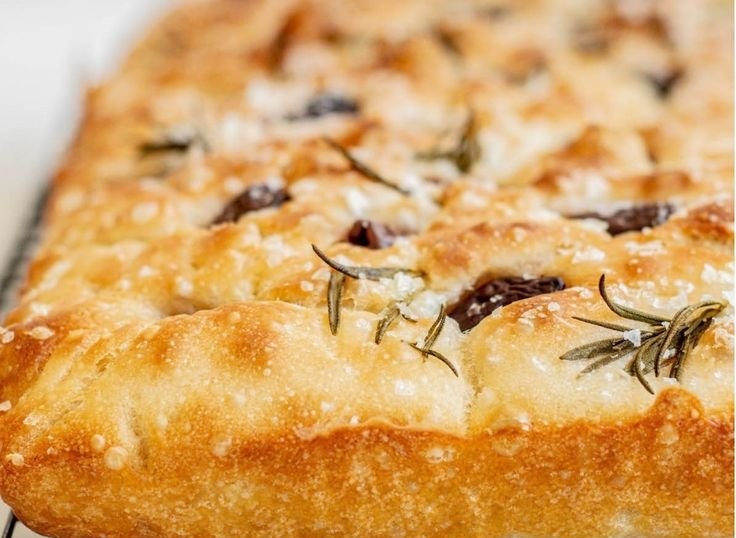
- Before baking, dimple the surface of the dough with your fingers and sprinkle with flaky sea salt and herbs if using.
- Bake for 20–25 minutes or until golden brown and crispy.
- Let cool slightly before slicing and serving.
FAQ
Q: Can I freeze this focaccia?
A: Yes. Cool completely, then wrap tightly in plastic and foil or place in a freezer bag. Freeze for up to 2–3 months. Reheat in a low oven to refresh the crust.
Q: What can I use instead of sourdough starter?
A: You can use commercial yeast (instant or active dry) as a substitute. For this recipe, use about 1.5–2 tsp instant yeast, mix with the flour, and reduce the first rise time significantly (about 1–2 hours until doubled). Expect less tang but still a great focaccia.
Q: How do I know my starter is active?
A: An active starter will be bubbly and rise predictably after feeding. A quick float test (a spoonful floats in water) can indicate good activity.
Q: Can I make this focaccia on a different hydration?
A: You can lower hydration slightly (e.g., 320g water) if your dough is too sticky to handle, but higher hydration yields more open crumb and charmed dimples.
Tips & Tricks
- Use a wet fingertip when dimpling the dough to prevent sticking and to create deep, even pockets for oil and toppings.
- Do not aggressively deflate the dough when transferring to the pan; gentle handling preserves the trapped gas for a light crumb.
- Warm, but not hot, room temperatures speed fermentation. If your kitchen is cool, allow more time for rises or place the bowl in a turned-off oven with the light on.
- For extra crispness, bake the focaccia on the lower rack and finish with a minute or two under the broiler, watching closely.
Conclusion
If you want a detailed beginner-friendly walkthrough with plenty of photos, I recommend this Simple Sourdough Focaccia Bread Recipe | Alexandra’s Kitchen as a gentle companion to this method. For troubleshooting and shaping tips, see the helpful guide at Beginner’s Guide To Sourdough Focaccia Bread – The Clever Carrot. If you’re curious about hydration and crumb structure, this deep dive at A Simple Sourdough Focaccia | The Perfect Loaf is excellent.
Enjoy your warm, homemade sourdough focaccia — share it with loved ones and savor the simple joy of bread made with time and care. Always add
tag after Directions. as the final image of the completed recipe.