
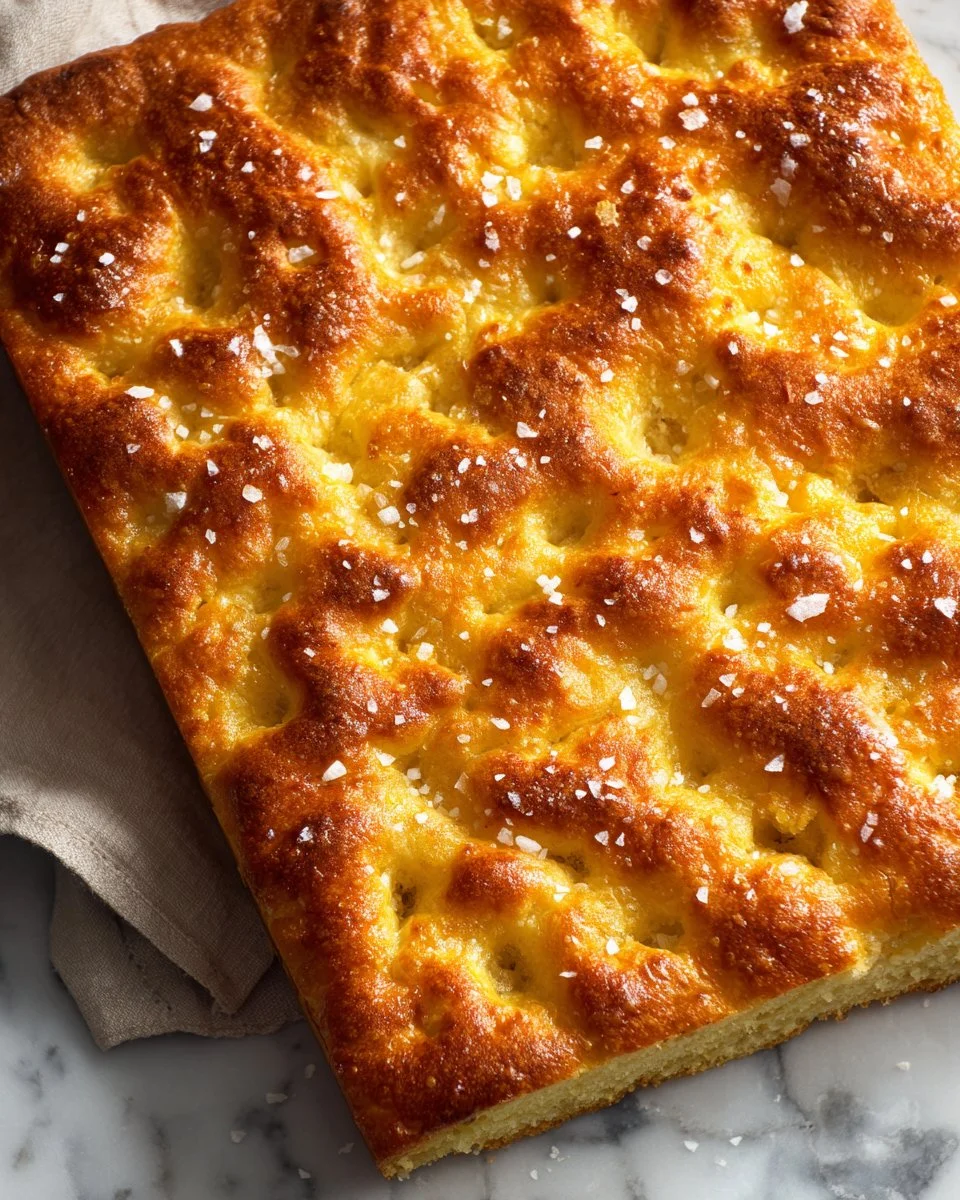
Focaccia Bread Recipe: Easy Homemade Italian Focaccia Bread
I fell in love with focaccia the moment I walked into my first Italian bakery as a teenager — the warm, salty olive oil aroma, the soft, pillowy crumb and crispy golden crust were irresistible. Since then, focaccia has become my go-to comfort bread: an easy, forgiving loaf that’s perfect for weeknight dinners, picnics, or a cozy snack with coffee. Historically (and deliciously), focaccia traces back to ancient Roman times and shines in Liguria, Italy, where olive oil and simple toppings like rosemary and flaky salt turn humble dough into something unforgettable. This recipe captures that rustic charm with an overnight fridge rise for extra flavor and convenience.
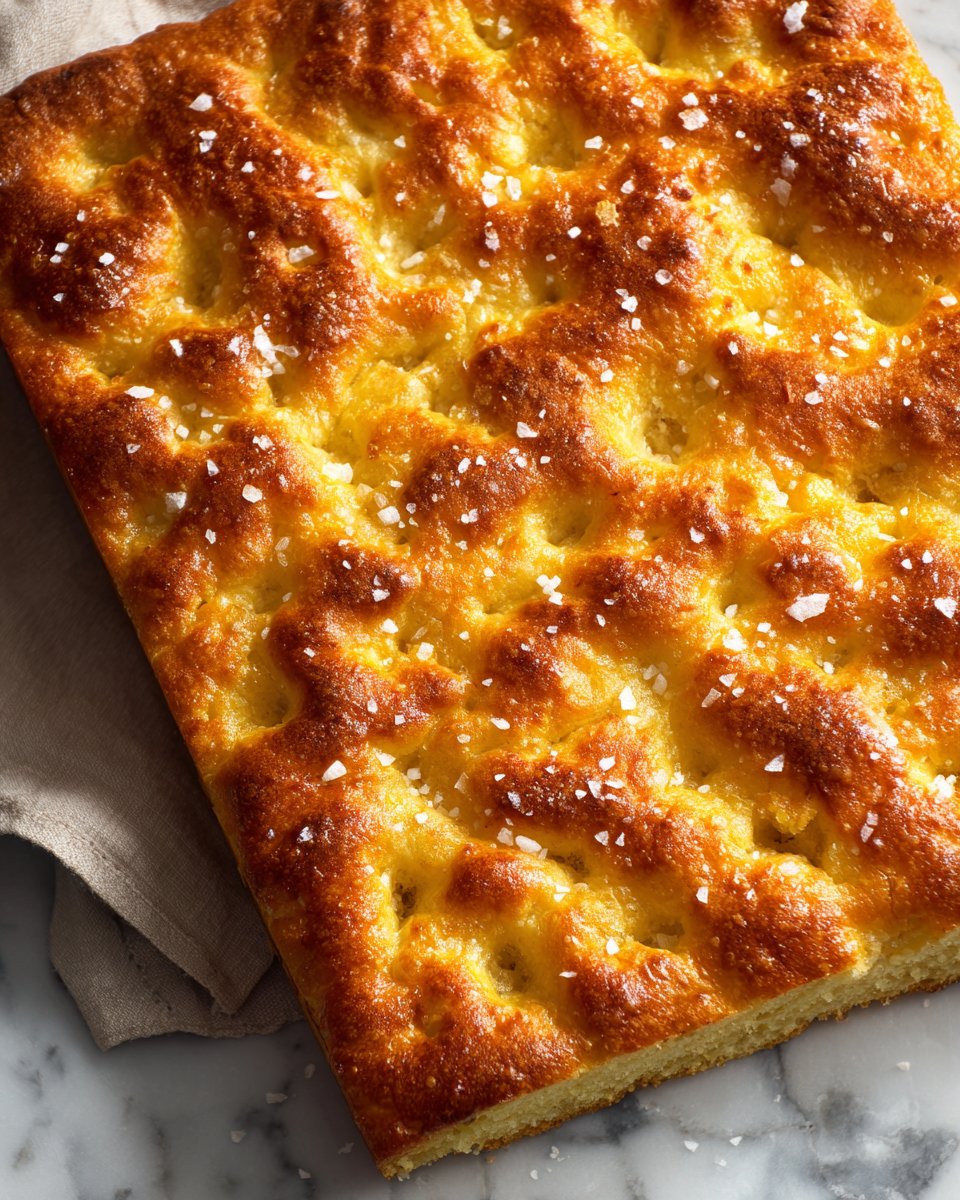
Who is this recipe for?
- This focaccia is for busy home bakers, beginners who want a forgiving bread recipe, and anyone who loves a savory, olive oil-forward loaf to serve with soups, salads, or as a sandwich base.
Brief overview of the core ingredients:
- The dough is built from 500 grams (4 cups) White Bread Flour, hydrated with 420 ml luke-warm water (105–114°F), leavened with 1 teaspoon (4g) Active Dry Yeast, seasoned with 2 teaspoons (10g) Kosher Salt and 1 teaspoon (5g) Maple Syrup*, enriched with extra virgin olive oil (both 1 tablespoon in the dough and 4 tablespoons divided for the pan/topping), and finished with 1 tablespoon flaky sea salt. You’ll also use basic tools like a large proofing bowl, a food scale, parchment paper, a 9×13 metal baking tray, and a serrated bread knife.
Tools & Ingredients
Tools
- Large Bowl for proofing
- Food Scale
- Parchment Paper
- 9×13 Metal Baking Tray
- Serrated Bread Knife
Ingredients (with brief benefits)
- 500 grams (4 cups) White Bread Flour – provides strong gluten structure for a chewy, airy crumb.
- 420 ml Luke-Warm Water (105–114 degrees F) – hydrates the flour and activates the yeast for an open texture.
- 1 teaspoon (4g) Active Dry Yeast – leavens the dough and adds fermentation flavor.
- 2 teaspoons (10g) Kosher Salt – seasons the dough and strengthens gluten.
- 1 teaspoon (5g) Maple Syrup* – feeds the yeast gently and adds a subtle depth of flavor.
- 1 tablespoon (15ml) Extra Virgin Olive Oil – enriches the dough for tenderness and flavor.
- 4 tablespoons Extra Virgin Olive Oil, divided – used for the pan and drizzling to crisp the crust and infuse flavor.
- 1 tablespoon Flaky Sea Salt – finishing salt that adds crunch and bright flavor.
- Large Bowl for proofing – provides space for the dough to rise and rest.
- Food Scale – ensures accurate measurements for consistent results.
- Parchment Paper – prevents sticking and makes removing focaccia from the pan easy.
- 9×13 Metal Baking Tray – classic pan size for even baking and the right focaccia thickness.
- Serrated Bread Knife – for clean, even slicing once cooled.
Instructions
- Day 1 — Prepare the dough: In a large bowl (big enough for the bread to proof), stir together the 420 ml luke-warm water, 1 teaspoon (4g) active dry yeast, 1 teaspoon (5g) maple syrup, 1 tablespoon (15ml) extra virgin olive oil, and 2 teaspoons (10g) kosher salt until evenly combined. Set aside for a couple of minutes to let the yeast bloom.
- Weigh the flour: In the meantime, weigh out 500 grams (4 cups) white bread flour on the food scale. Add the flour into the wet ingredients bowl and mix until all dry flour patches are gone.
- Rest: Place a cloth over the top of the bowl and let the dough rest for 10 minutes.
- First stretch and fold: After 10 minutes, the dough will be sticky. With wet hands, grab a corner of the dough and stretch it over itself. Rotate the bowl and repeat this action on all sides of the dough until a loose ball forms in the center. Let it rest for 10 minutes.
- Second stretch and fold: Repeat the stretch-and-fold process one more time after the rest.
- Oil and refrigerate: Drizzle 1 tablespoon of olive oil on the dough and spread it evenly. Cover the bowl with a towel and place it in the fridge overnight (12–24 hours).
- Day 2 — Prepare pan: Evenly spread a bit of olive oil around your 9×13 baking tray, then line it with a sheet of parchment paper (the oil helps the paper stay in place). Then drizzle about 2 tablespoons of olive oil on the parchment and spread it evenly around the base and sides.
- Transfer dough: Remove the dough from the fridge, gently scrape the sides of the bowl, and carefully slide the dough into your oiled tray.
- Shape: With oiled hands, fold one side of the dough toward the middle, then repeat on the other side. Flip the dough so the seams are at the bottom and the smooth side is at the top.
- Proof: Cover the tray with another tray or a clean towel and let it proof for 2 hours at room temperature.
- Preheat and dimple: Set your oven to 425°F. While it preheats, drizzle the top of the dough with more extra virgin olive oil and spread it evenly with your fingers. Using both hands, press your oiled fingers into the dough, gently touching the bottom of the tray; repeat until the entire surface is dimpled.
- Top and bake: Sprinkle the dimpled dough with a generous amount of flaky sea salt and any other toppings you like (fresh rosemary, thinly sliced garlic, cherry tomatoes, olives). Bake for 25 to 30 minutes, until the bread is golden and crisp.
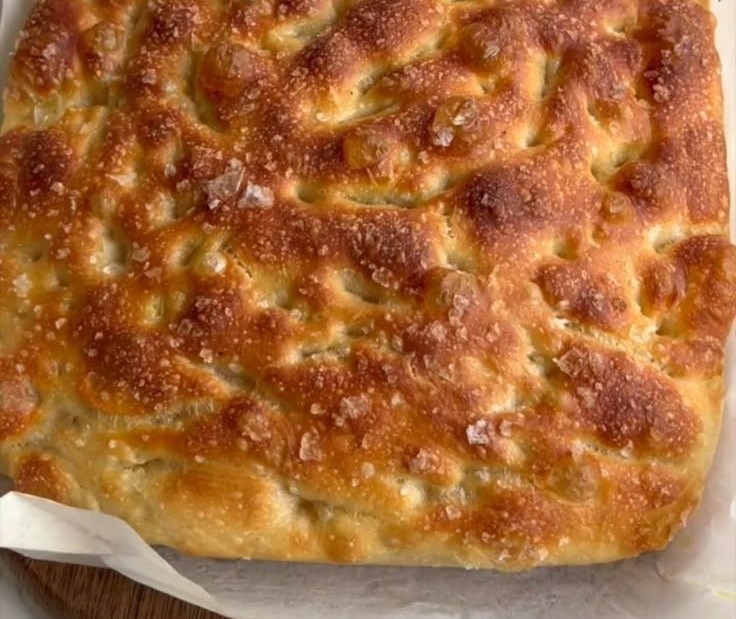
- Rest before slicing: After removing from the oven, take the focaccia out of the pan and let it rest for at least 10 minutes before cutting. It’s best to let it cool completely, but I understand the temptation to eat it warm. Enjoy.
FAQ
Q: Can I freeze this focaccia?
A: Yes. Once completely cooled, wrap slices or whole focaccia tightly in plastic wrap and foil, then freeze for up to 2 months. Thaw in the fridge overnight and re-crisp in a 350°F oven for 8–10 minutes.
Q: Can I use all-purpose flour instead of bread flour?
A: Yes, but expect a slightly less chewy and open crumb. Bread flour’s higher protein helps develop more gluten, which gives focaccia its characteristic texture.
Q: What if I don’t have maple syrup — any substitute?
A: You can substitute an equal amount of honey or a pinch of sugar. The sweetener simply helps the yeast bloom and contributes subtle flavor.
Q: Can I shorten the fridge time and bake the same day?
A: Yes. If you’re pressed for time, you can proof at room temperature for 2–3 hours until puffy and then proceed to shape and bake, but the overnight fridge rise develops deeper flavor and a better texture.
Tips & Tricks
- Use wet hands when handling sticky dough to prevent sticking and keep the dough silky.
- Be generous with the olive oil on the pan and in dimples — it creates that beloved crisp, golden crust.
- Don’t skip the dimpling step: it’s the signature of focaccia and prevents large air pockets while trapping the oil and toppings.
- If your kitchen is cool, extend the final proof slightly; if very warm, keep an eye on it to avoid over-proofing.
Conclusion
If you want to compare technique or find inspiration for toppings and variations, check these trusted resources: The Best, Easiest Focaccia Bread Recipe | Alexandra’s Kitchen, Focaccia Bread Recipe – Love and Lemons, and Easy Focaccia Bread Recipe for different takes and useful tips.
Enjoy your warm, fragrant focaccia — share it with friends and family for the best results. Always add
tag after Directions.