
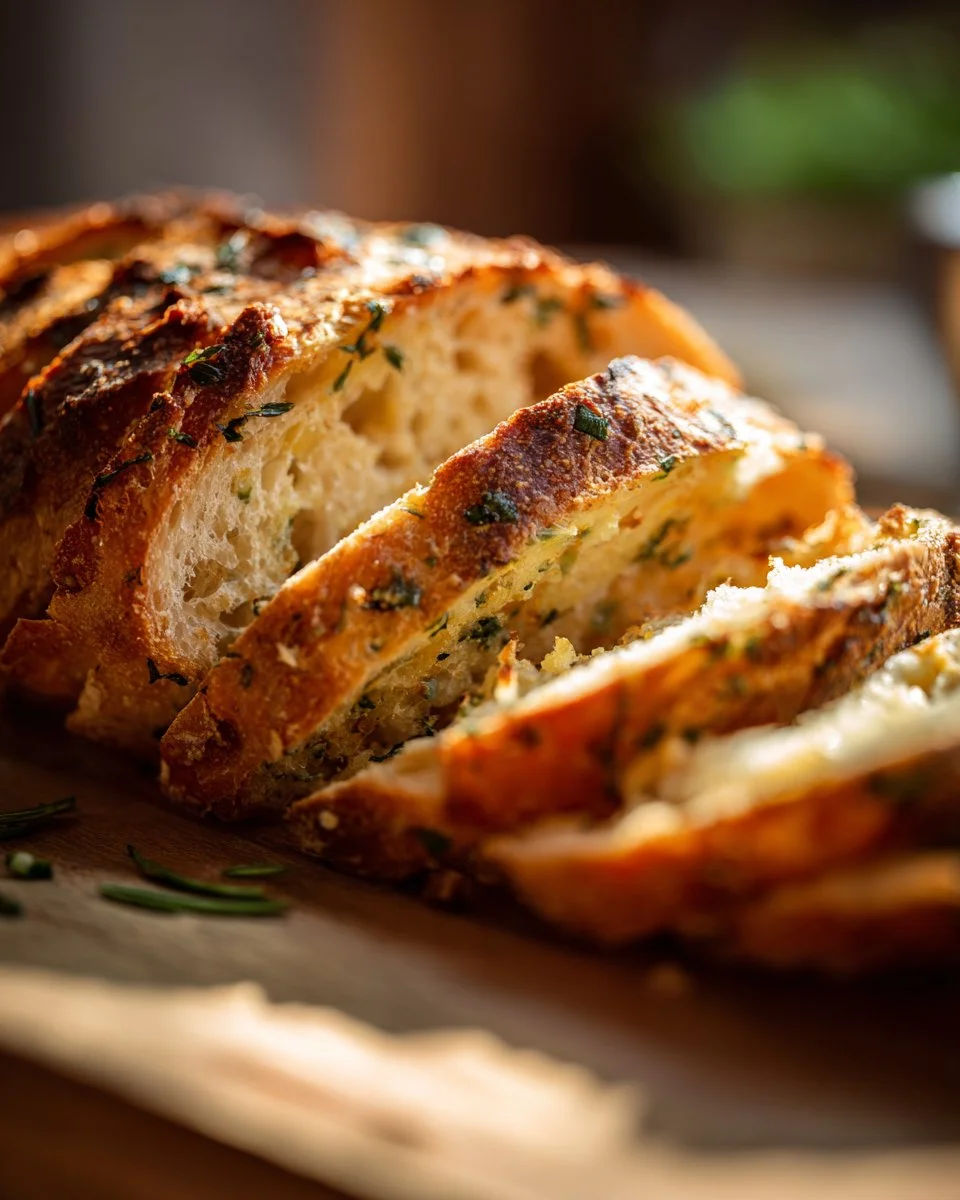
Italian Herbs and Cheese Artisan Sourdough Bread — sourdough recipe
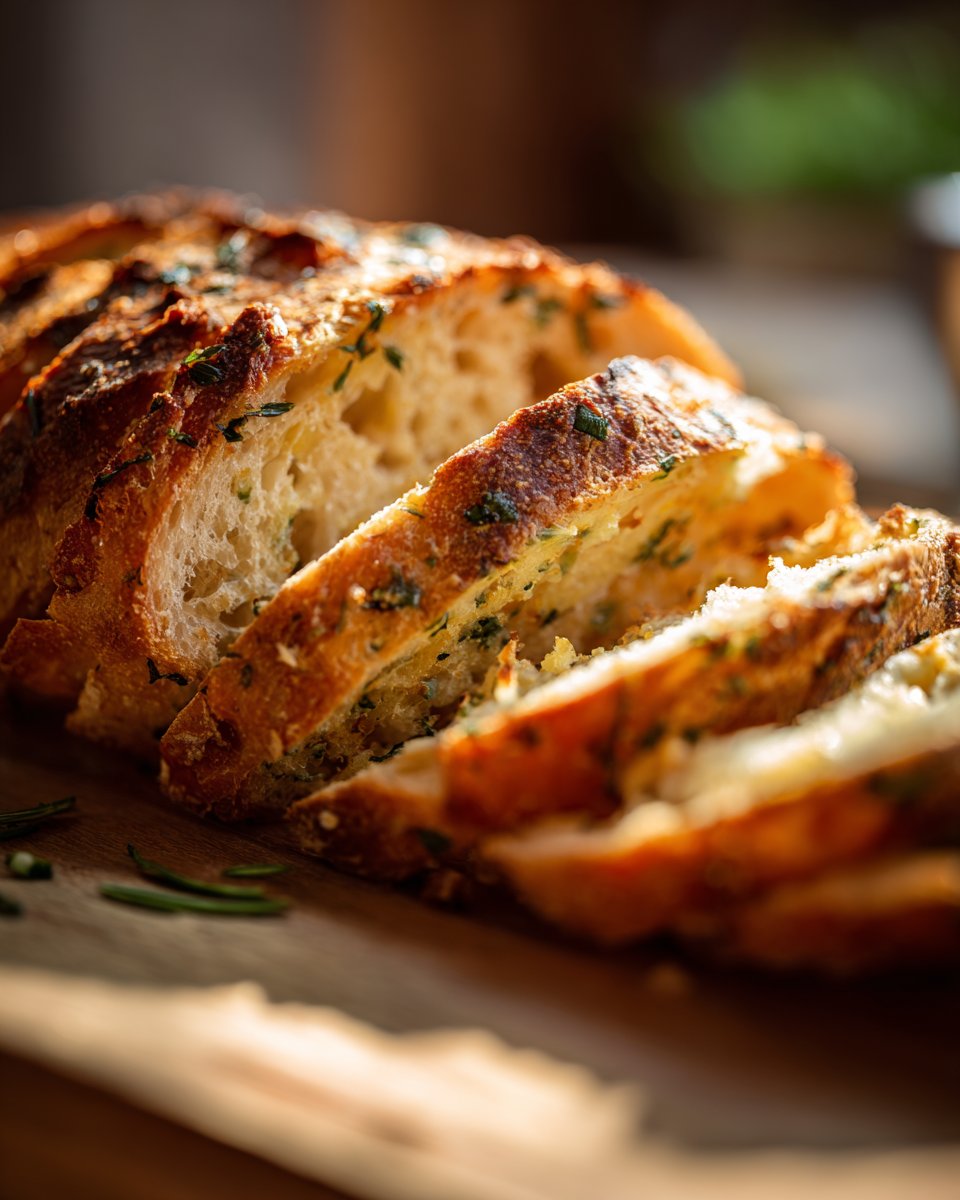
I’ve been baking sourdough for years, and this Italian Herbs and Cheese Artisan Sourdough Bread is one of my most-loved creations. I first made it on a chilly Sunday, coaxing bubble-rich dough while the house filled with warm, cheesy aromas — the kind of comfort that turns a simple loaf into a family ritual. The Italian herb blend (think rosemary, oregano, thyme, basil) evokes rustic Italian bakeries and simple peasant breads flavored with garden herbs and good cheese. It’s warm, a little savory, and perfect with olive oil or a bowl of soup — a bread that feels both homemade and a little special.
Who is this recipe for?
- This recipe is perfect for home bakers who love artisan-style breads, busy parents who want a make-ahead loaf, cheese lovers, and sourdough beginners who are comfortable with basic starter feeding and stretch-and-fold technique.
Core ingredients overview:
- This loaf combines active sourdough starter, bread and whole wheat flours for structure and flavor, water for hydration, sea salt and an Italian herb blend for savory depth, and a mix of Colby Jack and Parmigiano Reggiano cheeses for melty, nutty richness.
Tools & Ingredients
Tools
- Digital kitchen scale — for accurate measurements.
- Mixing bowls (large) — for dough mixing and autolyse.
- Bench scraper — for folding and handling sticky dough.
- Dough scraper or spatula — for clean mixing.
- Proofing basket (banneton) or a bowl lined with a flour-coated towel — for final shape and support.
- Lame or sharp knife / razor blade — for scoring the loaf.
- Dutch oven (or baking stone plus steam method) — for oven spring and crust development.
- Plastic wrap or reusable cover and a clean kitchen towel — for bulk proofing.
- Oven mitts and cooling rack — for safety and cooling.
Ingredients (with short benefits)
- 12 g sourdough starter (active or discard) — jumpstarts fermentation and flavor.
- 60 g water (for feeding starter) — hydrates the starter so it becomes active.
- 60 g bread flour (unbleached, King Arthur) — provides food for yeast; develops structure.
- 325 g water — hydrates the dough for an open crumb and good fermentation.
- 450 g bread flour (unbleached, King Arthur) — forms the loaf’s structure and chew.
- 50 g whole wheat flour (Sunrise Flour Mills) — adds nutty flavor and nutrients.
- 120 g active sourdough starter (from above) — primary leavening and tangy flavor.
- 25 g water — used to adjust dough consistency for optimal mixing.
- 10 g sea salt (Redmonds) — enhances flavor and controls fermentation.
- 3 g Italian seasoning blend — provides a classic savory herb profile.
- 4 g lightly dried basil — adds bright, sweet herbal notes.
- 110 g Colby Jack cheese, shredded — melty, creamy richness.
- 15 g Parmigiano Reggiano, shredded — savory, umami finishing flavor.
Instructions
Feed Your Starter
- Combine 12 g sourdough starter, 60 g water, and 60 g bread flour in a small jar or bowl. Mix until smooth.
- Cover loosely and leave at room temperature (about 21–25°C / 70–77°F) for 6–8 hours, or until bubbly and roughly doubled. You should have at least 120 g of active starter ready to use.
Make the Dough
3. In a large mixing bowl, combine 325 g water and 450 g bread flour with 50 g whole wheat flour. Mix until there are no dry pockets; this is the autolyse. Cover and rest for 30–60 minutes.
4. Add 120 g active starter (from step 2) and 25 g additional water to the autolysed flour. Mix until incorporated.
5. Sprinkle 10 g sea salt, 3 g Italian seasoning blend, and 4 g dried basil over the dough. Mix gently until salt and herbs are evenly distributed.
6. Add 110 g shredded Colby Jack and 15 g shredded Parmigiano Reggiano by folding them in with a wet hand or bench scraper so cheese is dispersed without overworking the dough.
7. Perform a series of stretch-and-folds: every 30 minutes for the first 2 hours, gently lift and fold the dough over itself 4–6 times (about 3–4 sets total). Keep the bowl covered between sets.
8. After the stretch-and-fold sequence, let the dough bulk ferment at room temperature until it has risen noticeably (about 3–4 hours total from mix time), or refrigerate for a slow overnight bulk fermentation (8–12 hours) for more flavor.
9. Turn the dough onto a lightly floured surface, pre-shape into a round, rest 15–20 minutes, then perform the final shaping into a tight boule or batard. Place seam-side up into a floured banneton or a bowl lined with a floured towel.
10. Proof at room temperature for 1.5–3 hours until slightly puffy, or retard in the refrigerator for 8–16 hours for convenience and depth of flavor.
Score & Bake
11. Position a Dutch oven (with lid) on the middle rack and preheat the oven to 250°C (480°F) for at least 30 minutes.
12. When ready to bake, carefully invert the proofed loaf onto parchment, score the top with a lame or sharp knife to help controlled expansion.
13. Transfer the loaf (on parchment) into the preheated Dutch oven, cover, and bake:
– Covered: 20 minutes at 250°C (480°F) to develop oven spring.
– Uncover: reduce temperature to 220°C (430°F) and bake an additional 18–25 minutes until deeply golden and the internal temperature reaches about 96°C (205°F).
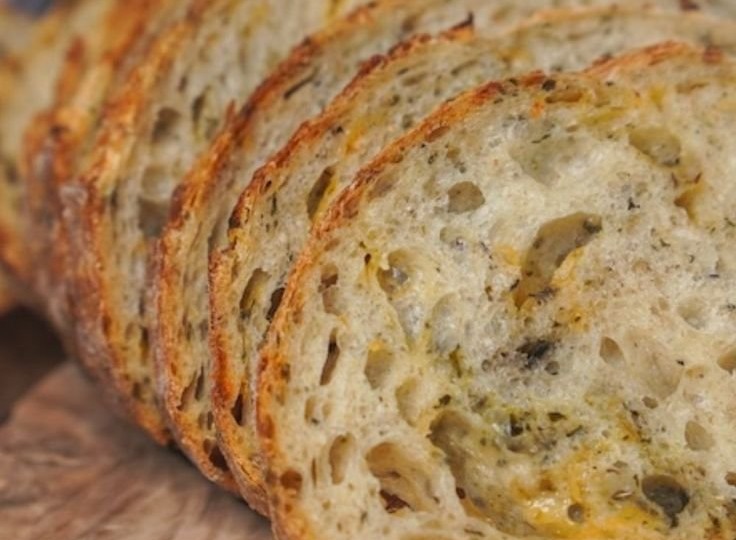
14. Remove the loaf from the Dutch oven and cool on a wire rack for at least 1 hour before slicing. Cooling allows the crumb to set and flavor to develop.
FAQ
Q: Can I freeze this bread?
A: Yes. Slice and freeze the cooled bread in airtight bags for up to 3 months. Toast or gently rewarm slices from frozen for best texture.
Q: What can I use instead of Colby Jack and Parmigiano Reggiano?
A: Swap with other semi-hard cheeses like cheddar, Gruyère, or mozzarella for different melting and flavor profiles. Use a hard, aged cheese for more umami if desired.
Q: Can I make this with a discarded starter only?
A: You can use discard starter, but the loaf may rise more slowly and have a milder tang. If using discard, allow for slightly longer bulk fermentation or warm proofing to ensure good rise.
Q: How do I know when my starter is ready to use?
A: Use it when it’s bubbly, has doubled in size, and passes the “float test” (a small spoonful floats in water). The smell should be pleasantly tangy, not overly sharp or alcoholic.
Tips & Tricks
- Weigh everything: a digital scale gives far more consistent results than volume measures, especially with high-hydration dough.
- Keep cheese dry: lightly pat shredded cheese if it feels damp; too much surface moisture can affect dough consistency.
- Gentle handling preserves air: when folding cheese in, use gentle motions to avoid deflating the dough and losing oven spring.
- Cold retardation improves flavor: proofing in the refrigerator overnight develops more complex, nutty flavors and makes scheduling easier.
Conclusion
If you’d like additional recipe inspiration or variations, check out this Italian Herb & Cheese Sourdough Bread – The Pantry Mama for a similar herb-and-cheese approach, or explore this Italian Herbs & Cheese Artisan Sourdough Bread Recipe – That Sourdough Gal for tips on shaping and scoring. For a related herb-and-cheese riff, see this Rosemary/Thyme and Cheddar Sourdough Bread to experiment with different herb-cheese combinations.
Enjoy this warm, savory loaf with olive oil, butter, or your favorite soup — and please share a photo if you bake it. Always add
tag after Directions.